FOR IMMEDIATE RELEASE
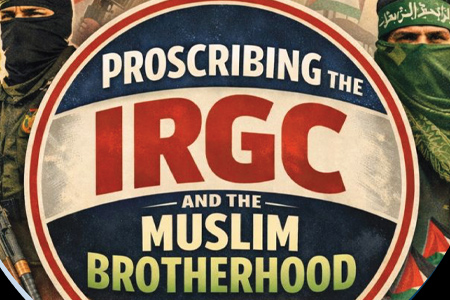
WBII and NJA Publish Parliamentary Briefing and Policy Recommendations Calling for the Proscription of the IRGC and the Muslim Brotherhood
London – 14 January 2026
We Believe in Israel (WBII), the National Jewish Assembly (NJA) and partners today announce the publication of their latest Parliamentary Briefing and Policy Recommendations, setting out the case for the proscription of the Islamic Revolutionary Guard Corps (IRGC) and the Muslim Brotherhood under UK law.
The briefing provides a comprehensive, evidence-based assessment of the threat posed by both organisations to the United Kingdom’s national security, social cohesion, and democratic institutions. Drawing on official government sources, parliamentary records, intelligence assessments, regulatory findings, and academic research, the report argues that the IRGC and the Muslim Brotherhood should be understood not as isolated or unrelated phenomena, but as complementary elements within a broader Islamist extremist ecosystem.
The publication examines how both organisations exploit open societies through a combination of ideological radicalisation, institutional entryism, intimidation of diaspora communities, financial facilitation of extremist networks, and the manipulation of anti-Israel agitation as a unifying and legitimising narrative. It highlights the growing convergence between Islamist extremism and segments of the radical Left in Britain, warning that this alliance has increasingly blurred the line between legitimate political discourse and the normalisation of antisemitism and apologia for violence.
Particular attention is given to the IRGC’s role as a state-backed security and coercive apparatus, including its support for proscribed terrorist organisations such as Hamas and Hezbollah, and its involvement in hostile activity on UK soil. The briefing also assesses the Muslim Brotherhood’s long-term strategy of gradualist radicalisation, influence over charities and educational institutions, and the creation of ideological environments conducive to terrorism, even where violence is not openly endorsed.
Alongside its analytical findings, the report sets out a detailed package of policy recommendations for HM Government and Parliament.
These include:
- The full proscription of the IRGC under UK terrorism legislation;
- The proscription of the Muslim Brotherhood and/or key affiliated organisations;
- The development of a new legal framework to address state-linked extremist entities;
- Enhanced financial scrutiny and sanctions enforcement;
- Strengthened oversight of charities, educational institutions, and community organisations;
- Closer coordination with international allies to counter extremist networks and foreign influence.
WBII and NJA stress that the recommendations are designed to safeguard democratic freedoms, not curtail them. The briefing explicitly affirms the importance of protecting legitimate criticism of governments and upholding freedom of religion and expression, while rejecting the use of those freedoms as cover for extremist activity.
Commenting on the publication, Catherine Perez-Shakdam, Executive Director of We Believe in Israel (WBII), said:
“This briefing is a call for clarity and consistency in how the UK confronts extremism. The evidence shows that both the IRGC and the Muslim Brotherhood operate in ways that undermine democratic society, even when their methods differ. Proscription, combined with robust legal and regulatory measures, is a necessary step to protect national security, social cohesion, and the rule of law.”
The Parliamentary Briefing and Policy Recommendations are intended for MPs, Peers, policymakers, regulators, journalists, and civil society stakeholders. They are available now and will be circulated across Westminster and relevant government departments.
ENDS