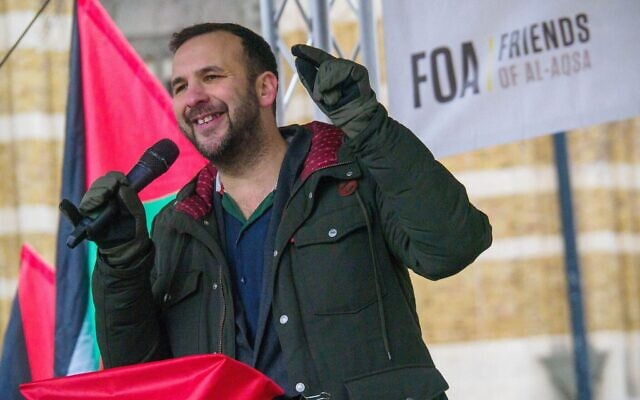
The National Jewish Assembly condemns Zack Polanski’s decision to support calls for the monitoring and investigation of British nationals who have served in the Israel Defence Forces.
No one is above the law, and credible allegations of war crimes should always be investigated. However, Mr Polanski is not lending his support to a mainstream government initiative, an independent prosecutorial process, or a formal law enforcement investigation. He has instead chosen to align himself with a campaign launched by anti-Israel activists and organisations, including individuals involved in an earlier dossier submitted to the Metropolitan Police concerning ten British nationals alleged to have committed offences while serving in Gaza.
The Metropolitan Police subsequently closed that investigation, concluding that an effective investigation could not be conducted and that there was no realistic prospect of a conviction. Yet rather than accepting that outcome, many of the same activists have returned with a fresh campaign seeking to cast suspicion on British nationals who served in Israel’s armed forces. Mr Polanski has now chosen to lend his name and support to that effort.
What makes Mr Polanski’s position particularly objectionable is the hypocrisy it exposes.
While choosing to associate himself with campaigns promoted by anti-Israel activists, Mr Polanski has continued to defend Green Party deputy leader Mothin Ali despite the widespread condemnation that followed Mr Ali’s remarks in the aftermath of the 7 October Hamas massacre. Many British Jews will find it extraordinary that a politician willing to support campaigns targeting those connected to Israel appears considerably less troubled by comments widely regarded as celebrating, excusing or minimising the largest massacre of Jews since the Holocaust.
This reflects a wider problem. The Green Party has repeatedly faced concerns regarding antisemitism within its own ranks, yet some of its leading figures appear far more interested in scrutinising Jews connected to Israel than confronting anti-Jewish prejudice closer to home.
Before seeking to place British citizens under suspicion because of their connection to Israel, Mr Polanski should put his own house in order. His willingness to defend Mothin Ali following the widespread condemnation of his comments after the 7 October Hamas massacre sits uneasily alongside his apparent determination to support campaigns directed at British nationals connected to Israel.
Mr Polanski’s Jewish identity does not place him beyond criticism. Many British Jews will question whether this intervention reflects a genuine pursuit of justice or simply another example of a politician aligning himself with causes that resonate within sections of the anti-Israel movement while failing to confront the antisemitism and anti-Jewish prejudice that continue to cause concern within his own political movement.